02 · Sports event SaaS
Connected operations for sports events
BEOND · Founder & Product Lead
- 10 Live events
- 05 Paying organizers
- ~10K People used the platform
02 · Sports event SaaS
BEOND · Founder & Product Lead
Case study
From fragmented race operations to one connected event platform. BEOND has operated across 10 live events for five paying organizers, with approximately 10,000 people using at least one platform capability.
Live events
10
real races, not a pilot
Paying organizers
5
commercial clients
People used the platform
~10K
used at least one capability
01 · Traction
0102/12
BEOND operated in real races rather than only in a pilot: 10 live events, five paying organizers and approximately 10,000 people using at least one capability. Collection, reconciliation and post-event reporting run in production.
Events supported include Pájara Race, Carrera Atlética Compensar, Gran Fondo Egan Bernal, UCI Gran Fondo Bogotá and Gran Fondo Tunja. During Gran Fondo Egan Bernal, BEOND recorded 130 incidents, including 11 health-related reports.
02 · Ownership
0203/12
I defined the product strategy, conducted research with athletes and organizers, designed the complete system, established the design language, implemented core React interfaces and operated the platform alongside organizers during real events.
Live delivery became a continuous research loop: every event exposed participant friction, operational risk and commercial priorities.
03 · Opportunity
0304/12
Organizers connected landing pages, forms, payment providers, spreadsheets, WhatsApp and manual reports. Every handoff created another place where data or responsibility could break.
Participants experienced the same fragmentation from the other side: they discovered an event, compared categories, paid, registered, received updates and found Race Day information through disconnected touchpoints.
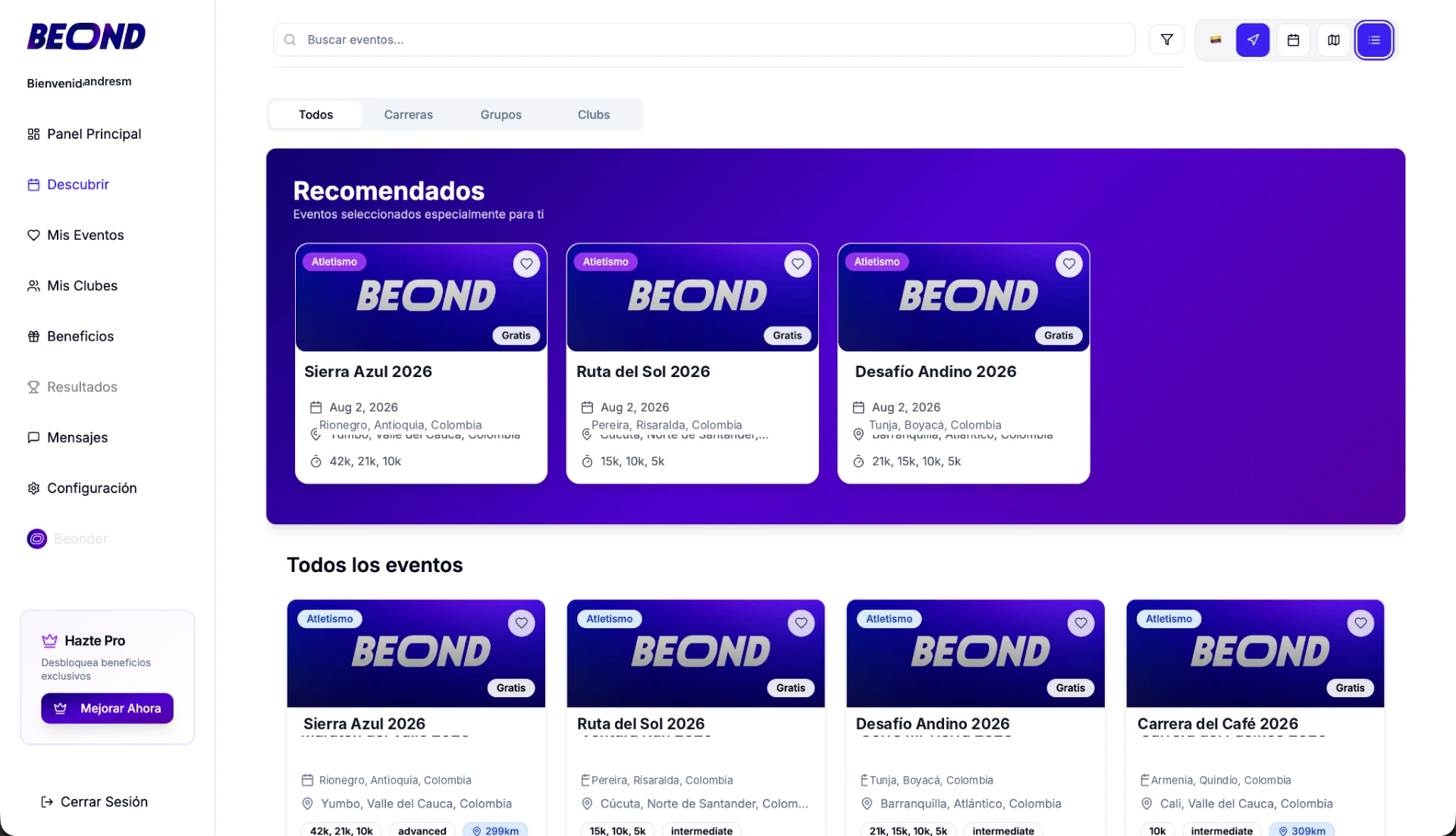
Interface · Event discovery
Desktop
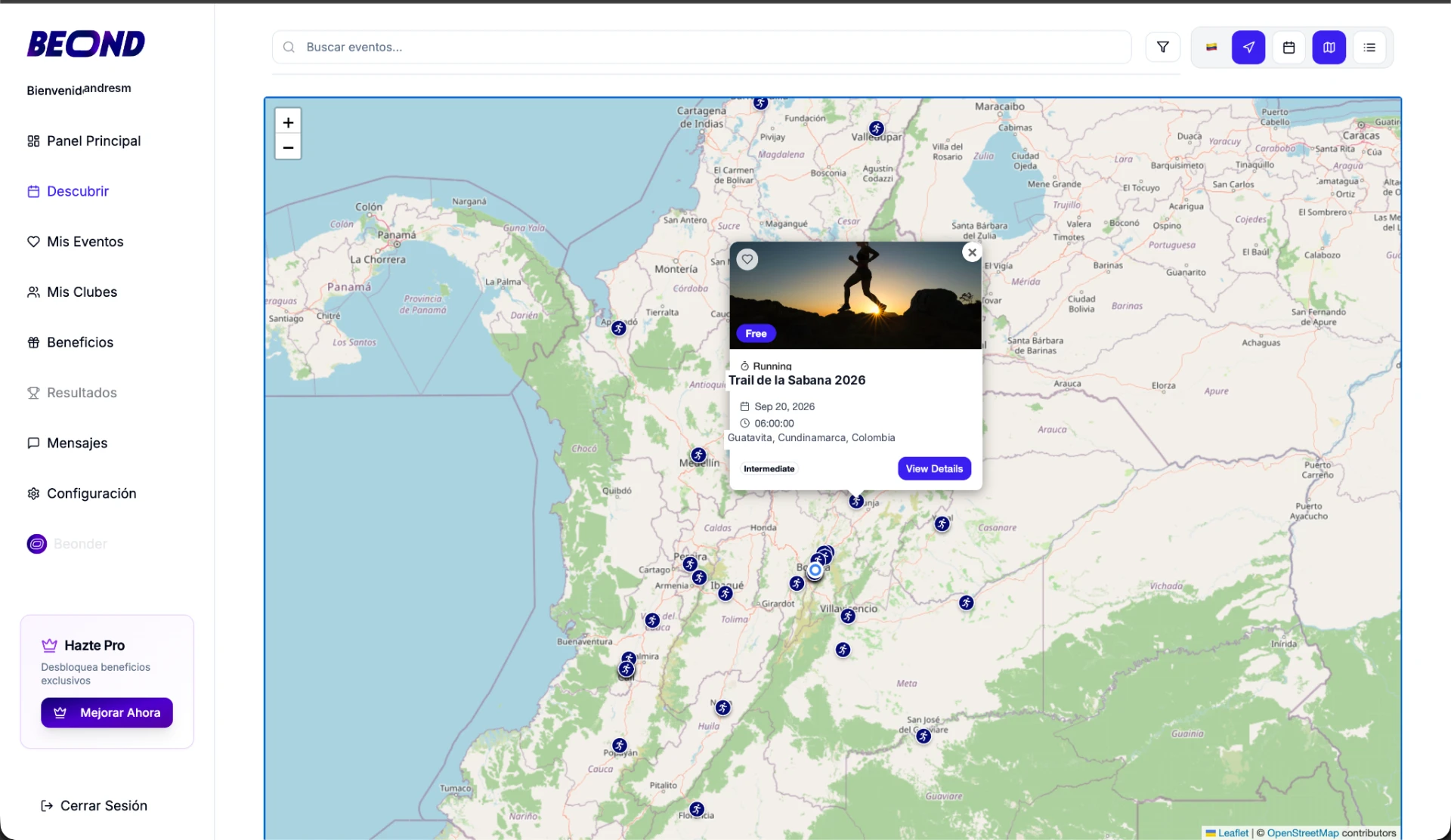
The public product is the entry point of the operation: participants find, compare and open an event from one place.
04 · Research
0405/12
18 interviews with athletes, organizers and clubs; four organizers observed in event operations; an audit of 12 real event-registration experiences; and two usability rounds with five participants each — ten moderated sessions in total.
“I already know my health provider and shirt size by heart because every registration asks me to write them again.” — Amateur athlete. “The night before the race, I stay up reconciling the spreadsheet with payment confirmations.” — Organizer.
05 · Strategy
0506/12
Each organizer can launch a branded event experience while registration, payments, participant records, Race Day operation and reporting remain part of one reusable system. Presentation changes by event; the operational core does not need to be rebuilt.
Participant path: Discover → Event detail → Category → Profile → Payment → QR credential → Race Day → Results. Organizer path: Create event → Configure categories → Manage participants → Reconcile payments → Check-in → Incidents → Results and reporting.
06 · Workflows
0607/12
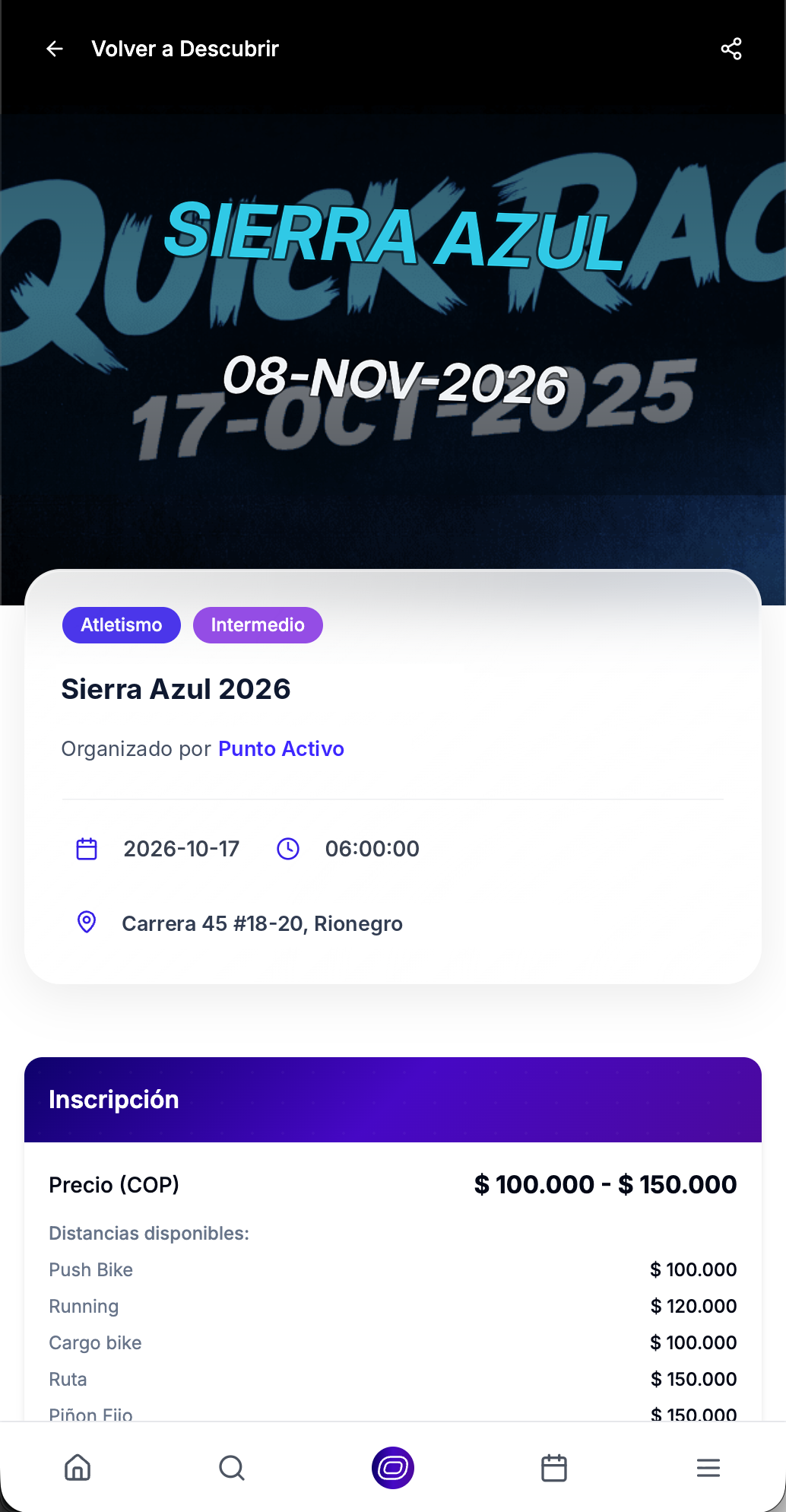
Registration became a four-step flow with a reusable athlete profile, a persistent price summary and an immediate QR credential that stays useful on Race Day. Organizers configure events themselves through a self-service editor with autosaving drafts and a publication checklist.
Public screens are captured from production. Private organizer and Race Day workflows are faithful reconstructions using anonymized or demonstration data; certificate generation is labelled as pilot functionality.
07 · Decision
0708/12
The initial process crossed a form, a payment application, WhatsApp and an organizer spreadsheet. Version 1 was one long page and five of eight participants abandoned the prototype. Version 2, a five-step wizard, improved completion but users reached payment without confidence in the final price.
Version 3 — four steps with a persistent price summary — keeps category, total and payment state visible and produces the operational credential immediately.
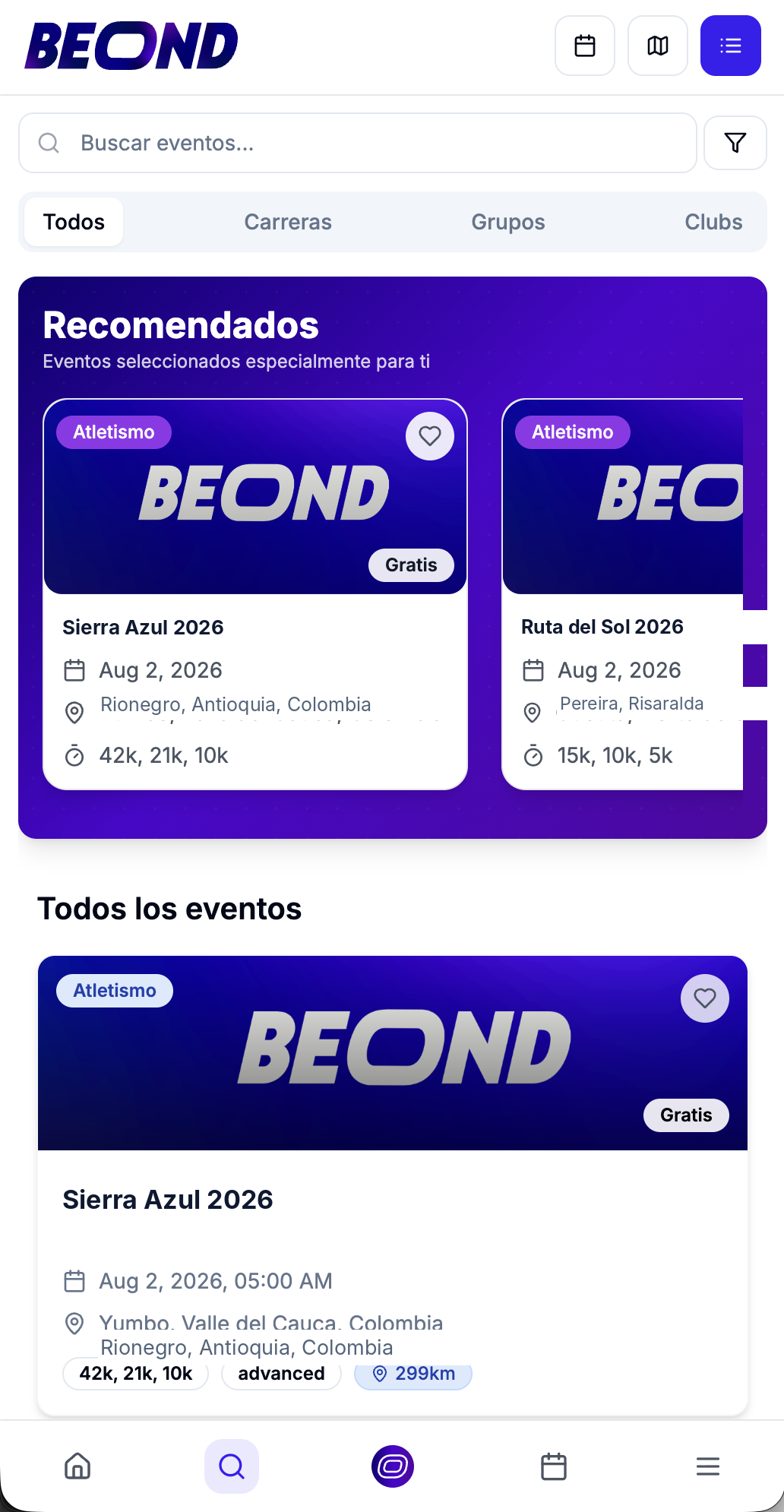
Interface · Registration and payment
Mobile
Registration runs as one continuous flow on the device participants actually use, ending in payment and a confirmed record.
08 · Validation
0809/12
Ten moderated sessions across two rounds. Registering for an event moved from 3/5 to 5/5, finding the QR after payment from 2/5 to 5/5, publishing an event from 2/5 to 4/5 and checking in three participants from 4/5 to 5/5. Five of five participants completed registration without help in round two — eight of ten across both rounds.
Observed registration time fell from roughly eight to twelve minutes across disconnected tools to about two minutes in the moderated product flow.
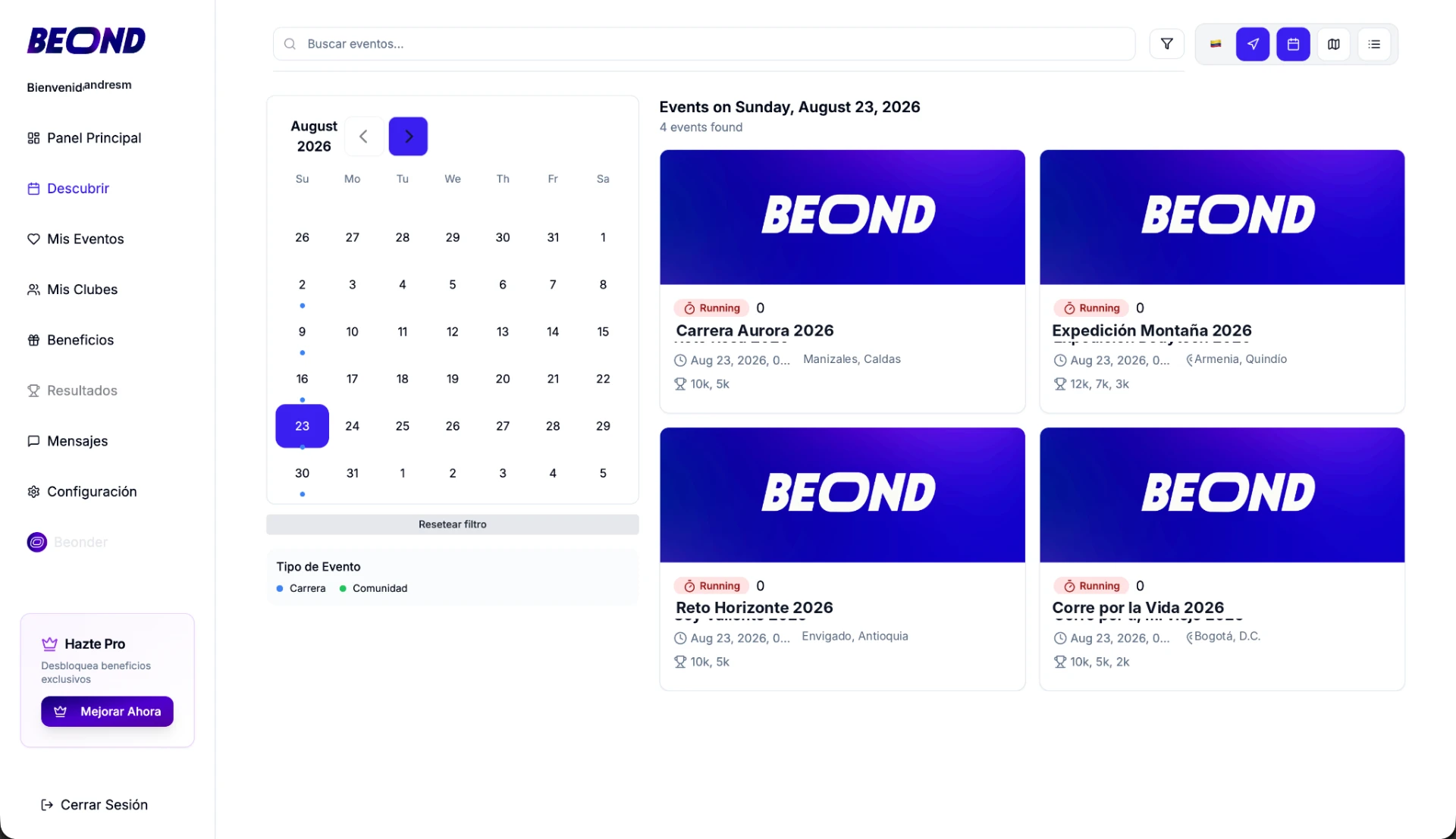
Interface · Operational proof
Desktop
Organizer planning and Race Day command: the event calendar coordinates the season, and the live map holds route, checkpoints and incident reporting during the race.
09 · Engineering
0910/12
I designed the product system and implemented core interfaces in React. Shared naming between design tokens and CSS reduced translation between visual intent and production components.
Accessibility: minimum AA contrast with higher contrast for critical Race Day states, 44 px touch targets, native mobile form controls, visible keyboard focus, modal focus management and 16 px base input text to avoid iOS zoom.
10 · Results
1011/12
Ten live events, five paying organizers, payments and reporting operating in production, and approximately 10,000 people using at least one capability across five flagship event formats. QR-supported field operation registered 130 incidents in one flagship event, including 11 health-related reports.
Business and adoption figures come from production activity across supported events; usability figures come from ten moderated sessions across two rounds.
11 · Reflection
1112/12
The participant experience and the organizer data model must be designed together, and exceptions — not the happy path — determine whether an event tool works under pressure. Reusable product infrastructure creates more leverage than rebuilding branded sites.
Next: stronger organizer self-service, more robust offline Race Day operation, results and certificates beyond pilot status, cross-event athlete identity and deeper post-event analytics.
Live product
See the work in its real context.